Reporting a Swimming Pool to the Tax Authorities: When, How, and What Are the Risks If You Forget?
Written by:
Modified on:
Reading time:
Article outline
- Why is it mandatory to report a swimming pool to the tax authorities?
- The 90-day deadline: the most important tax rule to remember
- What taxes are triggered by declaring a swimming pool?
- How to File a Tax Return for a Swimming Pool: A Step-by-Step Guide
- What are the risks if you don't report your pool to the tax authorities?
- Property tax exemption: How can you qualify after installing a swimming pool?
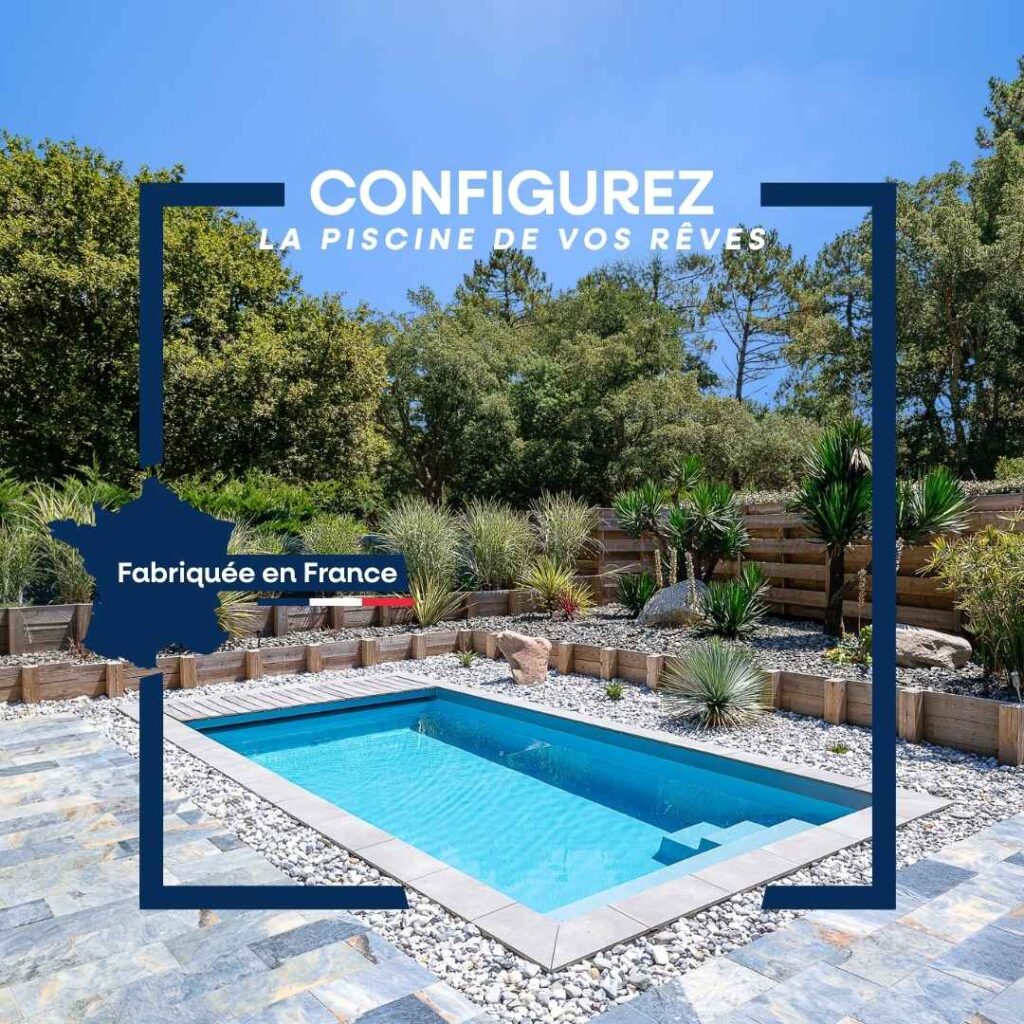
You’re thinking about having a prefabricated pool installed at your home, and like many homeowners, you’re already wondering about the administrative requirements. Permits, declarations, taxes… “Will I have to report my pool to the tax authorities, and how will that really affect my budget?”
The answer is yes, and it’s a good idea to plan for this even before construction begins. Building an in-ground pool triggers two distinct tax obligations , each with strict deadlines to meet. Understanding them fully from the planning stage helps avoid unpleasant surprises and, in some cases, allows you to take advantage of a two-year tax exemption that many homeowners miss out on because they weren’t aware of it in time.
In this guide, you’ll find everything you need to know: when to file, how to do it, and what the consequences are if you fail to do so.
In summary:
- All in-ground or semi-inground pools (including fiberglass pools) must be reported to the tax authorities within 90 days of the completion of construction.
- This declaration triggers two taxes: the one-time development tax and an annual increase in property tax.
- It is essential to meet the 90-day deadline in order to remain eligible for any two-year temporary exemption granted by certain municipalities.
- An unreported swimming pool may result in a tax assessment covering a four-year period, late payment penalties, and, in serious cases, a fine for violating the Urban Planning Code.

Why is it mandatory to report a swimming pool to the tax authorities?
As soon as a the pool is fixed to the ground permanently, it is considered by the tax administration as a built element of the property. A in-ground pool or semi-inground (whether it is a polyester shell, a concrete pool, or a panel pool) is considered a built-up outbuilding. It improves the comfort of the home, increases its utility value and, mechanically, its assessed rental value. It is this revaluation that justifies the obligation to declare to the tax authorities : it is not a specific tax related to the swimming pool, but an update of the tax base good overall.
It is important to distinguish between two types of administrative requirements that arise at different stages of the project:
- The notification to the city hall (prior notice of construction or building permit) must be obtained before starting the project.
- The tax filing, on the other hand, is filed after the work is completed.
These two procedures are complementary and independent: one authorizes the work, while the other notifies the authorities of changes to your property. Many homeowners focus on the first and overlook the second, which can have significant consequences, as we will see later.
Please note:
Since 2023, the housing tax has been eliminated for primary residences. It therefore no longer applies to your pool in this context. However, for a second home, the presence of a pool may still be taken into account when calculating the housing tax, which remains in effect for this type of property.
| Pool type | Is filing a tax return mandatory? | Development tax | Property tax |
| In-ground fiberglass pool | Yes | Yes | Yes |
| Semi-inground pool | Yes | Yes | Yes |
| Permanent above-ground pool (fixed anchoring) | Yes | Yes | Yes |
| Above-ground removable swimming pool (< 10 m²) | No | No | No |
The 90-day deadline: the most important tax rule to remember
This is THE deadline never to exceed. Any taxable pool must be declared to the tax authorities within 90 days of the completion of construction. The completion date corresponds to the moment when the pool is fully usable (and not the order date or the shell installation). In practice, it is often the watering and the inspection of equipment which marks the end of the construction site.
Why is this deadline so important? Because failing to meet it results in the permanent loss of the temporary property tax exemption that some municipalities grant to new buildings. This exemption can cover the first two years of tax increases, representing a savings of between €240 and €800, depending on your municipality. Once the deadline has passed, this exemption is lost without any possibility of appeal.
Use cases:
Mr. and Mrs. Lefèvre are having an 8×4-meter fiberglass pool installed on their property. The work is scheduled to be completed on June 18. They therefore have until September 16 to file their tax return.
Their municipality has approved a two-year property tax exemption for new constructions. By filing on time, they save approximately €480 over two years. If they neglect this requirement, they permanently lose this benefit and also risk a back-tax assessment if the tax authorities detect the pool through their monitoring tools (satellite imagery, tax-related artificial intelligence).
What taxes are triggered by declaring a swimming pool?
The swimming pool declaration to the tax authorities triggers two distinct taxes, which do not function in the same way or at the same time. Understanding them allows you to precisely anticipate their impact on your budget and avoid any unpleasant surprises when receiving the tax notice.
The development tax: a one-time payment upon moving in
The development tax is a one-time tax, payable only once upon installation. It is calculated based on a national flat rate updated annually (€251 per square meter in 2026) multiplied by the pool’s surface area, and then by the municipal and departmental rates set locally.
For the taxation of an 8×4-meter prefabricated pool (i.e., 32 m²), the tax base amounts to €8,032. The final amount then varies depending on the location: ranging from €80 in a rural municipality with low taxes to €650 in a large metropolitan area applying the maximum rates.
This tax is due 90 days to 18 months after the declaration of completion, payable in one or two installments depending on whether the amount exceeds €1,500. You can already estimate the amount on the official tax website.
Property tax: a steady annual increase
The property tax, on the other hand, is due every year. Installing a swimming pool results in an increase in the assessed rental value of your property, which serves as the basis for calculating this tax.
The process consists of three steps:
- Estimation of the new rental value based on the size and type of pool,
- Application of a flat-rate deduction of 50%,
- Multiply by the rate set by your municipality.
With a 8×4-meter pool, this increase amounts to an average of between €120 and €400 per year, depending on the location: a modest but ongoing expense that should be factored into the overall project budget.
| Tax | Nature | Moment | Estimated range (8×4 pool) |
| Development tax | Unique | Upon installation (90 days to 18 months later) | €80 – €650 |
| Property tax | Annual | Every year starting the following year | €120 to €400 per year |
How to File a Tax Return for a Swimming Pool: A Step-by-Step Guide
The Tax declaration procedure is entirely dematerialized and requires no travel. It is carried out from your personal space on impots.gouv.fr, in the "Real estate" section.
Here are the three specific steps to follow.
Step 1: Go to the "Real Estate" section
Log in to your personal account on impots.gouv.fr, then go to the "Real Estate" section. There you will find a list of properties registered in your name.
Select your residence and choose the option “Report a change in structure or use.” This process allows you to notify the authorities of the addition of a new structure (in this case, your pool) and triggers an update to your assessed rental value.
Step 2: Enter the pool's specifications
You will need to fill out the form by providing the following information:
- the pool's floor area (measured from one inner edge to the other),
- the type of installation (underground, semi-underground),
- and the completion date of the work.
Please note:
If you have also had a pool enclosure, a covered patio, or any other attached structure installed, these areas may be subject to taxation and must be reported separately. It is important to discuss this information with your installer in advance to avoid any mistakes.
Step 3: Verify and keep the supporting documents
Once the declaration is submitted, carefully keep the acknowledgment of receipt. It is your proof that you have met the 90-day deadline. You will then receive, within 90 days to 18 months, a Development tax notice.
The following year, check your property tax notice to ensure that the revaluation has been taken into account (and correctly calculated). In case of a manifest error, you have recourse through the Land Registry Service of your department.
What are the risks if you don't report your pool to the tax authorities?
Not declaring your swimming pool is not an option without consequences. The tax administration today have powerful detection tools: cross-referencing cadastral data, satellite image analysis, and the use of artificial intelligence algorithms capable of identifying undeclared basins across the entire territory. Several regularization campaigns have already led thousands of owners to receive notice of assessment unexpected.
From a tax perspective, an unreported swimming pool could result in a property tax assessment dating back up to four years, plus late payment penalties of 0.20% per month. In addition, you would permanently lose the two-year temporary exemption, if it applies in your municipality.
From an administrative standpoint, if the pool was not registered with the town hall prior to construction, the penalties can be significantly more severe: a fine of up to €6,000 per square meter built, or even a requirement to bring the structure into compliance or demolish it in the most serious cases.
For a 32-square-meter pool, the financial cost can be quite high.
Property tax exemption: How can you qualify after installing a swimming pool?
In certain municipalities, new constructions (including in-ground and semi-in-ground swimming pools) may benefit from a temporary property tax exemption for two years.
This is not an automatic entitlement: the municipality must have adopted this measure through a municipal resolution. If this is the case, and if you register your pool within 90 days of the completion of construction, you will not have to pay the property tax increase will take effect with your pool for two full tax years. This is a real benefit, the amount of which varies by municipality: from €240 to €800 in cumulative savings over two years. To find out if you are eligible, contact your department’s property tax office, which has this information.
If your municipality has not approved this exemption, the property tax increase will take effect the year following your tax return. In any case, planning for your local taxes as early as the planning stage of your project allows you to factor this impact into your overall budget.
Reporting your pool to the tax authorities isn’t just another administrative requirement—it’s a crucial step in any well-managed pool project. By meeting the 90-day deadline, distinguishing between the two required filings (planning and tax), and anticipating the impact on property tax and development tax, you can ensure long-term peace of mind regarding your tax obligations.
If you're interested in building a pool at your home, the experts at Aboral Piscines are here to provide personalized, no-obligation guidance.
Share this article

You may be asking yourself these questions?
The declaration must be filed within 90 days of the completion of the work. This deadline must be met to avoid penalties and retain any two-year property tax exemption.
On impots.gouv.fr, under the "Real Estate" section. Enter the area, the type of pool, and the completion date.
Above-ground pools that can be completely dismantled, have no permanent anchors, and are less than 10 m² in size are generally exempt. All in-ground pools and fiberglass pools are subject to taxation.
The declaration is free of charge. It triggers a development fee (a one-time payment of €80 to €650) and an annual increase in property tax (€120 to €400 per year, depending on the municipality).
A property tax assessment covering a four-year period, including penalties; the permanent loss of the two-year exemption; and potentially a fine of up to €6,000 per square meter of floor area.
Yes, if your municipality has approved this exemption and you file your claim within 90 days. It covers two years of property tax increases, resulting in savings of between €240 and €800, depending on the municipality.
On the same topic
Your fiberglass pool project is waiting for you!
Configure your shell pool in just a few clicks or find your nearest Aboral distributor for personalized support from start to finish.