What regulations for the safety of your swimming pool?
In 2022, the private swimming pool construction has seen a significant increase, with 188,000 new swimming pools, which is 32,000 more than in 2019. If you are also one of these new pool owners or wish to become one, don't forget to consider certain security measures.
And for good reason, although the number of drowning accidents is decreasing compared to the number of new swimming pools, it unfortunately remains too high. To minimize these risks, a swimming pool safety law was enacted on January 3, 2003, imposing various safety devices mandatory.
Everything you need to know about pool safety law
Where does the swimming pool safety law come from?
Each year, 13% of drownings are caused by a swimming pool accident, more than half of which occur in private swimming pools for family use. Most of these accidents are due to a lack of supervision, especially when it comes to children under 6 years old.
Given that drowning in swimming pools is the leading cause of death in young children, it is important to act and continue prevention.
What does the law say?
In order to strengthen the safety around swimming pools, the law on swimming pool safety private was enacted on January 3, 2003. Thus, since January 2004, “lprivate in-ground swimming pools, whether individual or collective, must be equipped with a standardized safety device aiming to prevent the risk of drowning” (Légifrance). In concrete terms, this means that every pool owner is now required to equip themselves with a security device.
This standard has evolved over time to improve accident prevention. In 2004, an amending decree (decree no. 2004.499) was published, setting the general requirements to which safety devices must answer. NF standards were established at the end of December 2003 for the four possible types of equipment, then updated in 2004 and more recently in 2009 concerning the detection alarm system.
Today, the holder of a in-ground pool or semi-basement must be able to prove, in case of inspection, that its pool complies with standards of safety applicable to private swimming pools.
Since the May 1, 2004, dwellings rented seasonally with existing swimming pools are required to comply with this rule. Since the January 1, 2006, all other existing swimming pools must have safety equipment that complies with current standards.
The penalty incurred for non-compliance with the swimming pool safety law
For owners who do not comply with current safety regulations, sanctions are to be expected. Indeed, in case of non-compliance with the rule, owners will first be exposed to an increased risk of drowning accidents.
Furthermore, they face criminal penalties, including a fine of up to €45,000.
How to apply the swimming pool safety law?
The application of the law
There are two scenarios to consider: securing pools built before January 1, 2004, and those built after.
For pools built before January 2004, the owner has several options:
– He can take responsibility for attesting that the security device of his pool responds to the security requirements of the law in force;
– He can choose to have his system inspected by an authorized person, such as the seller, the manufacturer, a controller, or an installer, in order to verify its compliance with the new standards;
– He can also opt for a more cautious approach by having a new standardized security system installed.
Regarding swimming pools built after January 2004, the owner must imperatively put in place a security system compliant with current standards. Furthermore, manufacturers must be able to provide their customers with proof of their products' compliance.
The different devices
If the owner must necessarily install a security device for his swimming pool, the law grants him the freedom to choose from the 4 existing types of equipment. Here is a list of the available equipment:
– The pool alarm;
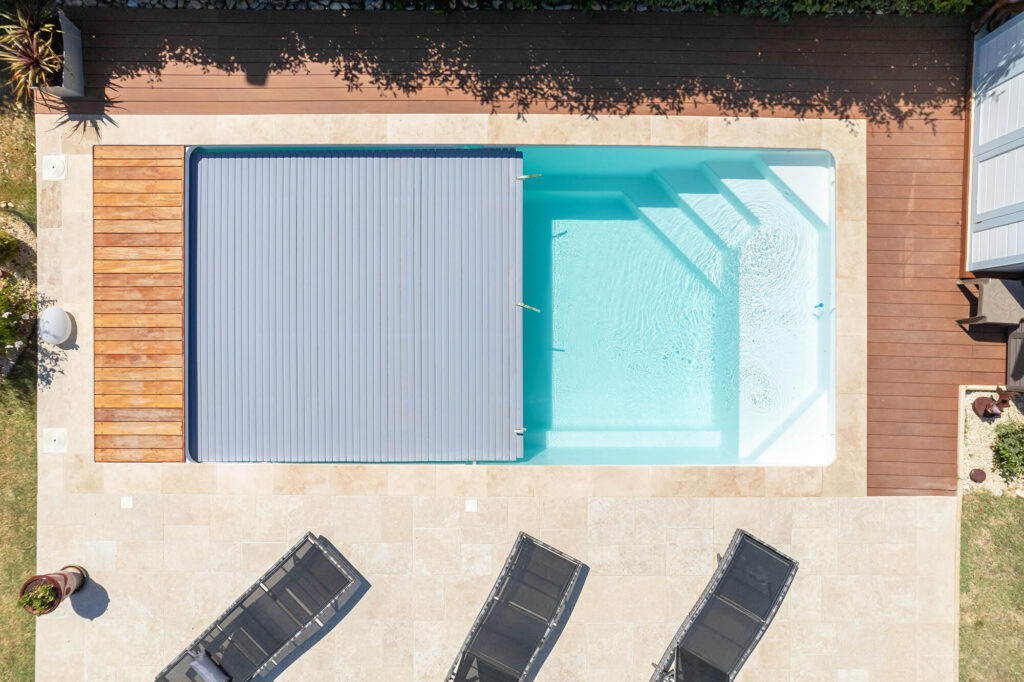
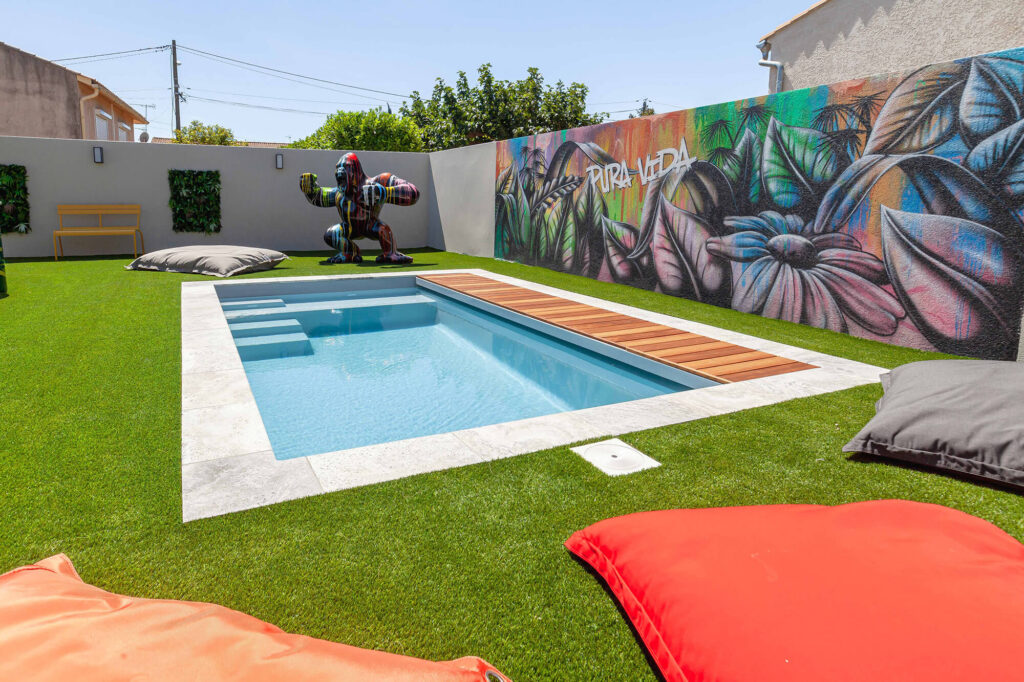
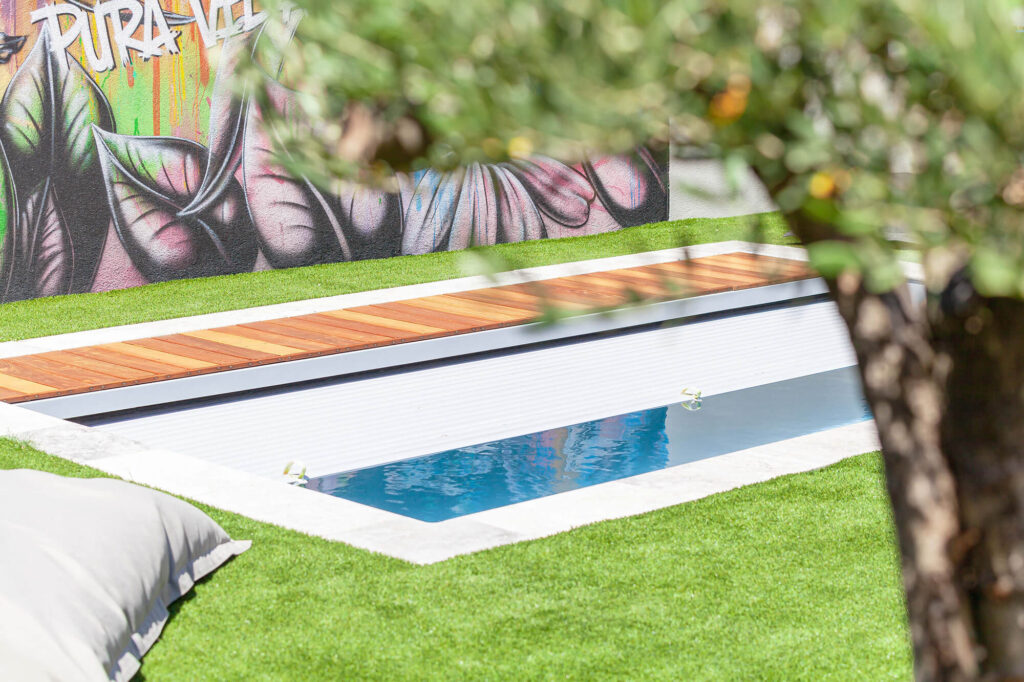
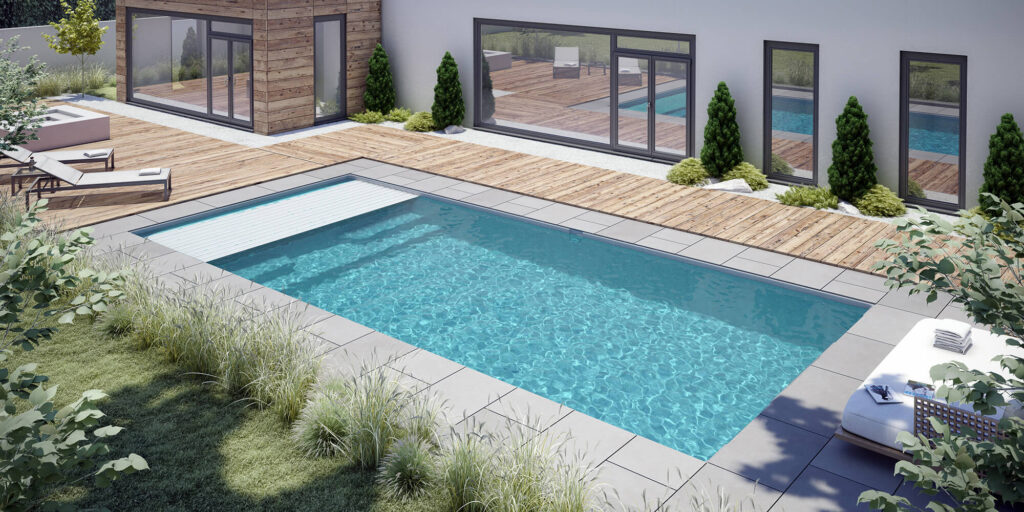
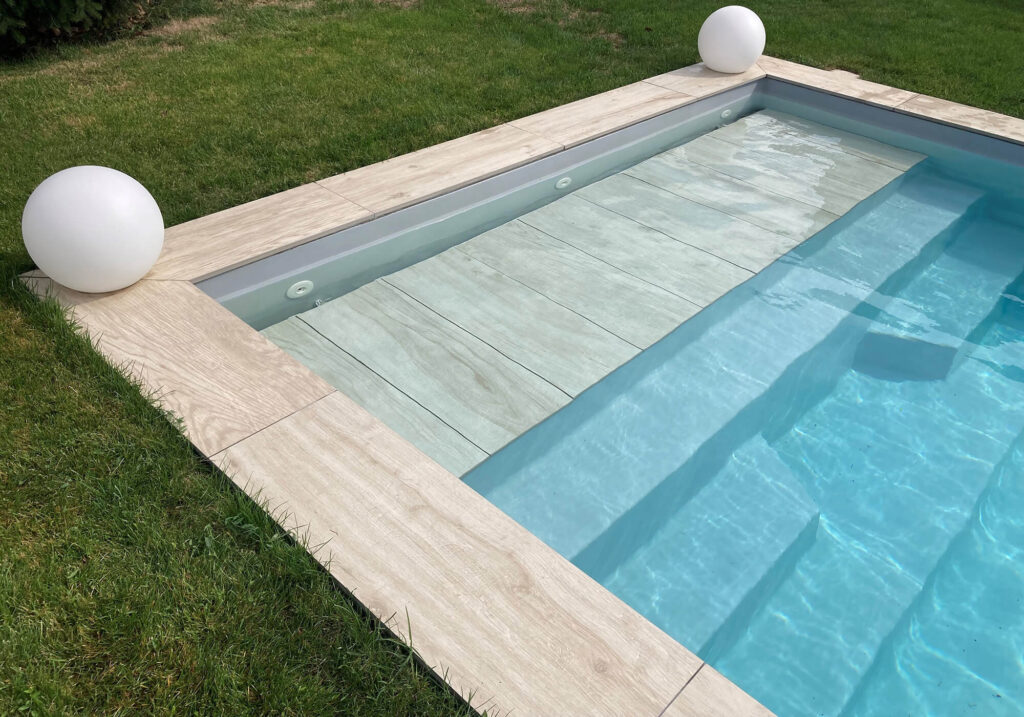
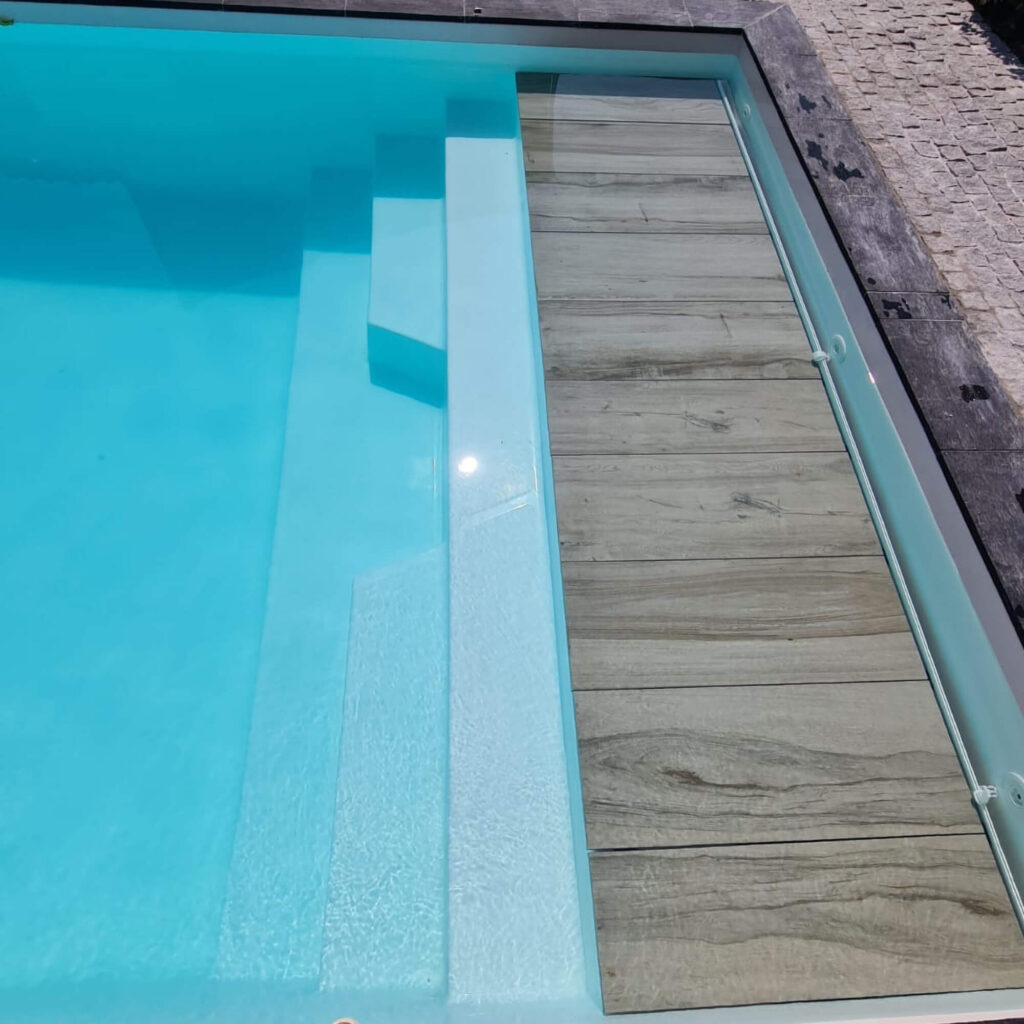
– The roller shutter or slatted covers;
- L'pool enclosure
– The protective barrier : or the fence.
Several different devices – sometimes complementary – exist for secure your swimming pool. In order to choose the best safety device for your pool, study your budget beforehand, the use of your pool, as well as the shape of your basin. This will help you make the right choice.
Unconcerned models
As previously mentioned, this law applies only to in-ground pools or semi-underground. The types of pools that are not concerned include:
– Above-ground pools;
**– Public or private swimming pools for public use with paid access, supervised by a lifeguard (governed by the Sports Code);**
– Inflatable or above-ground pools.
Despite the implementation of this law and the availability of different pool safety systems (alarms, tarpaulins, pool covers, safety barriers), a high rate of accidents still persists. This is why we remind you that safety devices for swimming pools : must not in any way replace swimming supervision. Especially if your pool is not concerned by theswimming pool safety obligation and you do not have a security device. Increased vigilance is paramount!
Configure your pool online Back to all news